

In 2009, Meherwan and Molly Irani opened a small Indian street food restaurant on Battery Park Avenue in Asheville. They ran out of food by midday.
Neither of them had planned on being restaurateurs. Meherwan sold cars in San Francisco for more than a decade, then moved into high-end real estate development, which stopped dead when the economy did in 2008. Molly at least grew up around the business, since her parents owned a restaurant. But that meant she swore she’d never own one.
What they had between them was a recession, a mountain town where nobody was asking for chaat, and a menu built entirely out of Meherwan’s memories. The food he grew up eating in Ahmednagar, a small town in Maharashtra. What he craved, and what sparked a dream.
That upbringing matters more than any résumé or pedigree does.
Whole spices arrived at his family's house the way produce arrives at yours, in quantity, smelling of the place they came from. Every autumn the family spent a full week making their own dhansak masala at his grandmother's, roasting and cooling and grinding the whole lot by hand. Nobody in that kitchen thought of it as a skill. It was closer to a season, like canning tomatoes.
So the plan in 2009 was simple: cook that food for strangers. Jugaad it when you need to. Hope enough of them came back.
Thirteen years later, the James Beard Foundation named Chai Pani the Outstanding Restaurant in America.
The part that isn't about food
Ask Meherwan why any of it worked, and he won't start with recipes.
He'll start with a phrase he has been repeating for years: mastery in servitude. The idea is that if every act you perform is an act of service, the work changes you, and it changes the people around you. It's an old spiritual concept, and a strange foundation for a restaurant group. It also explains almost everything they’ve built since.
Chai Pani's actual mission, in his words, is “blowing people away with how much we care.” Note what's missing from that sentence. Food doesn't appear in it. Food is the delivery mechanism.
You can feel that the second you walk into the restaurants. Bollywood playing loud enough to raise your voice over, smiles and kind welcomes as you walk in, murals and family photos on the walls, spices roasting in a kitchen somewhere behind you, everything landing on stainless steel thalis that clatter when they hit the table.
He's described the goal as engaging every one of your senses at once, so that lunch turns into an adventure to India. You don’t really understand it until you're sitting in it, sweating a little, eating okra fries with your fingers.
I am sharing all of this because I want you to remember it when you open the cookbook.
This isn't an argument that Indian cooking is sophisticated and you should respect it. Meherwan wrote this book because he wants you to feed people, and the fastest way to get you to feed people is to stop making it complicated.
Cooking Indian food at home is easier than you think.
That's not encouragement; it's the argument of the entire book, and it's the reason he wrote one. Not to teach you a cuisine. To get dinner on your table on a Wednesday.
Because if you love Indian food and have no idea where to start, that's not a cooking problem. Nobody is intimidated by a potato. What stops people is a list of nine spices in four forms with no sense of which ones matter, and that's a solvable problem. Solve it, and the cooking was never the hard part.
Which brings us to the three rules.
Rule one: Indian food is about building layers of flavour and texture
Most American home cooks approach a curry the way they'd approach a soup. Put things in a pot, add liquid, wait. That's not how it works, and it's the single biggest reason homemade Indian food comes out tasting flat and slightly muddy.
Indian cooking is closer to assembly. Every element enters at a specific moment and does a specific job, and the order matters more than the ingredient list suggests.
Most of the steps you can hear, which is the part written recipes are bad at telling you.
Mustard seeds hit hot oil and go off like tiny popcorn, hard for about thirty seconds. Cumin seeds don't pop at all. It darkens a shade and starts smelling like toast, and it does that in ten or fifteen seconds. Onions go from noisy to quiet as the water cooks out of them. Cook a few Indian dishes, and you'll stop watching the clock and start listening to the pan, which is exactly how Meherwan’s family did it.
Texture is the half people skip, and it's half the point.
Look at a plate of bhel puri and start counting: puffed rice, fried sev, raw onion, boiled potato, wet chutney, a squeeze of lime. That dish is an argument about crunch, and it's on a timer, because the chutney is already softening the sev the moment it's mixed. Eat it fast. Take the crunch away, and you have a bowl of damp snack.
The same logic runs through a curry. Lime and cilantro at the end are not garnish. They're the last two layers, and leaving them off is like leaving the sev off your bhel.
Rule two: improvisation is encouraged
There's a word for this, and Meherwan has been using it for years.
Jugaad means getting the thing done with exactly what you have, and doing it well enough that nobody asks what you were missing.
His favourite version of it is the street hawker who runs a full menu off a two-by-two-foot table with one pot, one ladle, and one knife. No mise en place. No second burner. The whole operation fits in a bag, and the food coming off that table beats most of what you'll eat in a restaurant with a hood system.
The other version happens in home kitchens, constantly, and nobody writes it down. Chai Pani's okra fries are a good example. They came from Meherwan's mother, and he's said he's pretty sure she invented the recipe, which is what it looks like when somebody improvises so well that the improvisation becomes the dish.
That's a thing your own family does too. You've probably eaten someone's jugaad a hundred times without knowing it had a name.
For you, this means the recipes are starting points rather than contracts. No curry leaves? Skip them and be generous with the cilantro. No paneer? Potatoes work, chickpeas work, even tofu. Cauliflower where the recipe says okra. Yogurt where it says cream.
Rule three: there's no such thing as three square meals a day
“In India nobody asks whether you're hungry. And nobody in my house ever sat down to three meals a day. You ate when food showed up, and food showed up constantly. They’d hand you something, and it was always so satisfying; it made me feel loved. That gesture is most of what I've been trying to rebuild in every restaurant since." - Meherwan Irani
Four in the afternoon brings chai and something fried, and that counts as a meal. A plate of chaat at six. A kathi roll at eleven at night, a toastie handed to you off a cart while you’re walking somewhere else, a paper cone of something salty on a train platform. In India, food shows up constantly and in small portions, and half of it gets eaten standing up.
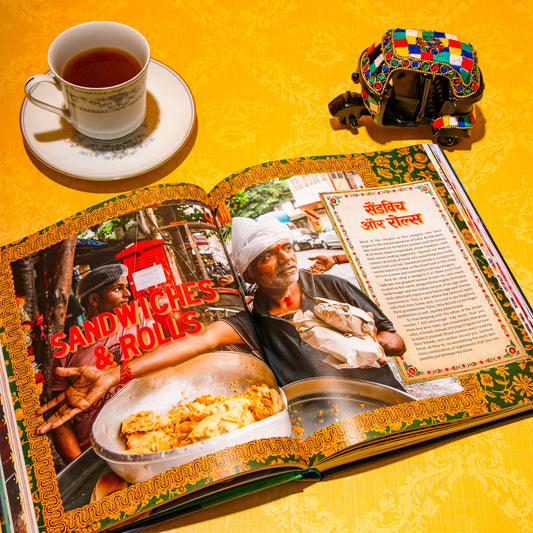
You can see this in the book's own table of contents, which sorts itself by chaat, sandwiches and rolls, cafe food, grilled things, home cooking, and sweets. Those aren't courses. They're times of day and moods. We’re eating on vibes here, folks. And the vibes are perfect.
Here's the practical payoff. You don't have to cook an Indian dinner to cook Indian food!
Make one thing. Masala smashed potatoes on a Tuesday night with your rotisserie chicken and fresh sliced veggies. A pot of dal with rice and a spoonful of yogurt. Chaat masala on cut cucumbers while you figure out what else is happening.
That's not a lowered bar. That's how the food actually gets eaten where it comes from.
What the three rules have in common
These are not about difficulty, and they don’t ask for equipment you don't own. Each one shortens the distance between you and putting food in front of yourself or someone you love.
Which is the whole thing, really.
Go back to that week at Meherwan’s grandmother's house, together as a family roasting and grinding a year's worth of masala because that's what autumn was. Nobody was performing. They were making sure there'd be enough for everybody, for months, and having a decent time doing it.
The restaurants came out of that. So did the spice company, and now the book. Three versions of one idea Meherwan and Molly have been working on since they left steadier lives to show up, spread love, and cook food for their neighbours.
Food is how you take care of people. Everything else is logistics.
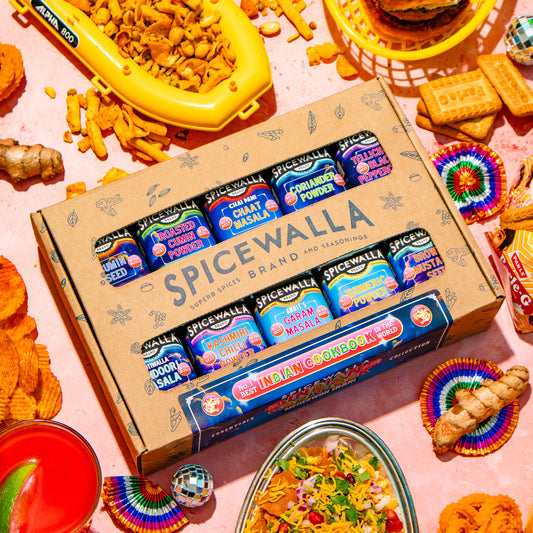
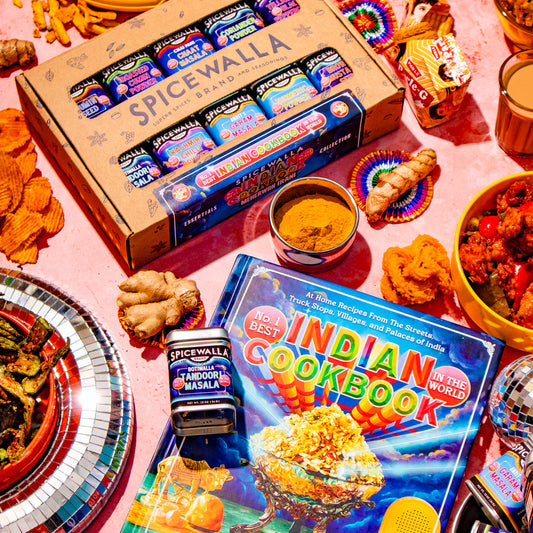
No. 1 Best Indian Cookbook in the World is out now. The 10-Pack No. 1 Best Indian Cookbook Essentials Collection holds the ten spices and blends his recipes call for most.
Buy the bundle, start with these recipes, or choose the ones that resonate with you! Share them with the people you love.
Spread love, cook Indian food!
Cara Manning, Spicewalla's Director of Marketing