

In 2010, researchers at UC Davis bought olive oil off store shelves, every bottle labelled extra virgin, and sent it to a lab for testing. Sixty-nine percent of the imported samples failed.
A few had been cut with cheaper refined oil. Others came from damaged, overripe olives. Plenty had oxidized from heat, light, or age until they tasted rancid.
The label said extra virgin. The oil said otherwise.
Most of us choose olive oil by price and a pretty label. People who make olive oil read the bottle differently. They look for four things.
1. The harvest date, not the best-by date
Olive oil isn't wine. It doesn't get better in the cellar. It's closer to fresh juice, and it starts losing aroma and flavour from the day the olives are pressed.
That's why the best-by date can mislead you. Producers often set it as far as two years past bottling, which tells you nothing about when the olives came off the tree.
A harvest date does. If a bottle won't tell you when its olives were picked, ask yourself why.
Our 2026 Le Vigne Extra Virgin Olive Oil comes from the harvest at the end of 2025 and went into tins in early 2026.
Once you open a tin, the clock speeds up, so plan to finish it within a few months.
2. A flavour profile you can name
Good olive oil tastes like something. Professional tasting panels score three positive traits: fruitiness, bitterness, and pungency (that peppery burn in your throat).
Flat, greasy, or faintly like crayons? Those are signs of age or damage.
Timing matters most when it comes to flavours.
- Pick early, while the fruit is still green, and you get less oil with more grassy, bitter, peppery character.
- Wait until the olives ripen and the yield goes up while the flavour mellows toward butter and soft fruit.
Variety matters too, and so does the land. Le Vigne's grove is built on Moraiolo, an Umbrian olive known for intensity, growing in untilled, grassed soil with no synthetic pesticides.
The estate picks when the olives reach the point that gives the best oil with the most phenolic compounds, and it mills them immediately. This year, the yield produced green tomato and fresh herbs on the nose, ripe fruit on the first sip, and a pepper that hangs around.
3. The polyphenol count
Polyphenols are natural antioxidants in olives. They're also where much of the flavour lives. The bitterness and the throat-catching pepper both come from them, and they help protect the oil itself from going stale.
The numbers in olive oils can vary widely:
|
Oil |
Polyphenols (mg/kg) |
|
Standard supermarket olive oil |
about 50 to 150 |
|
Average commercial extra virgin |
about 100 to 250 |
|
High-polyphenol threshold |
300 and up |
|
2026 Le Vigne Extra Virgin Olive Oil |
584 |
Few bottles print a polyphenol count. Producers who test for it tend to share it, so when a brand stays quiet on the number, that silence tells you something.
Polyphenols also fade with time and light, which brings us to the last thing on the list.
4. Packaging that keeps the light out
Light is olive oil's worst enemy on the shelf. In a 2019 study, researchers stored extra virgin olive oil three ways for five weeks: clear glass, clear glass wrapped in foil, and amber glass.
Oil in clear glass exposed to sunlight did worst on every measure, with more oxidation and fewer phenolic compounds. Amber glass held up better. The clear bottles wrapped in aluminium foil showed no deterioration at all.
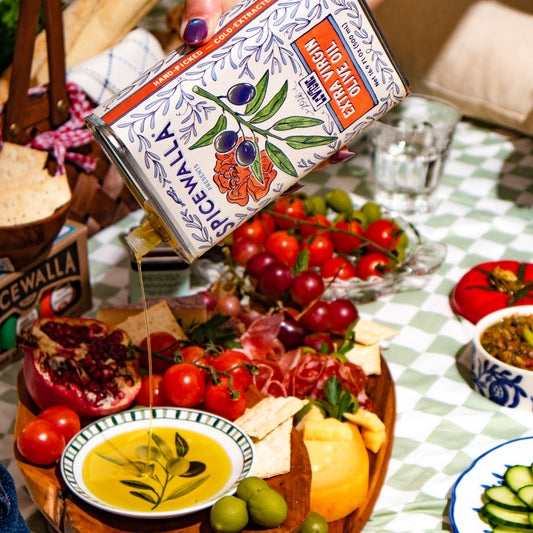
Our tin is that foil-wrapped bottle, minus the foil. When we launched Le Vigne last year, plenty of new olive oils were showing up in squeeze bottles. We went with a tin. The TASTE podcast noticed:
"Olive oil is a really cool evolution for Spicewalla and I really like this olive oil. For the record, it is NOT available in a squeeze bottle it is zagging where everyone has zigged, it's in a wonderful 17 oz tin and its a beautiful vessel to have on your counter."
We'll take it. The tin looks good on the counter, and it keeps the oil inside tasting the way it did the day it left Umbria.
The 30-second label check
Next time you're standing in front of the olive oil, look for:
- A harvest date, ideally within the last 12 to 18 months
- A specific origin, down to the region or the estate
- Tasting notes that name actual flavours
- A polyphenol count, or a producer who'll tell you
- A tin or dark bottle, never clear glass