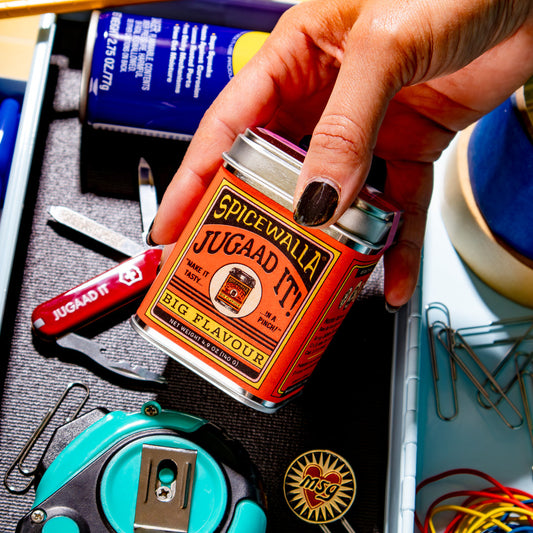


We get more questions about MSG than about almost any other ingredient we use in spice blends! And we get it, MSG has had a complicated reputation in the United States for more than fifty years.
That reputation was built on a letter, not a study. On speculation, not science. After diving into hours of research, we want to share what we found so you can make your own call!
What is MSG?
MSG stands for monosodium glutamate.
It's the sodium salt of glutamic acid, one of the most abundant amino acids on earth and one your body produces naturally every day. It's present in tomatoes, Parmesan cheese, mushrooms, soy sauce, miso, anchovies, and hundreds of other foods people have eaten throughout history without a second thought.
MSG was first identified in 1908 by Japanese professor Kikunae Ikeda, who isolated it from kombu seaweed while studying the compound responsible for a distinct savory taste he couldn't categorize as sweet, sour, salty, or bitter.
He called that taste umami. Within a year, commercial production began. For the next several decades, MSG was widely used in American and international cooking!
How is MSG made?
Today, MSG is produced through fermentation, the same process used to make yogurt, vinegar, and wine.
Manufacturers ferment natural carbohydrates from sugar cane, sugar beets, corn, or cassava using specific bacteria. The fermentation produces glutamic acid, which is then isolated, combined with sodium to make it stable, and dried into crystals. The end result is chemically identical to the glutamate found naturally in food.
What Does the Science Say about MSG?
MSG holds GRAS status (Generally Recognized As Safe) with the FDA, in the same category as salt, sugar, and vinegar.
The World Health Organization, the Joint FAO/WHO Expert Committee on Food Additives, and the European Food Safety Authority all classify MSG as safe.
The European Food Safety Authority set a conservative precautionary daily intake of 30mg per kilogram of bodyweight, with a 100-fold safety margin built in.
The fear around MSG traces to a 1968 letter published in the New England Journal of Medicine by Dr. Robert Ho Man Kwok, who described symptoms he sometimes experienced after eating at Chinese restaurants and suggested MSG as one of several possible causes. He was not claiming MSG was the problem. He was asking for research.
The media named the phenomenon Chinese Restaurant Syndrome. The science that followed, when properly conducted under double-blind conditions, consistently found that people who identified as MSG-sensitive could not reliably distinguish between food with MSG and food without.
In 2019, Ajinomoto successfully lobbied Merriam-Webster to revise its definition of 'Chinese Restaurant Syndrome' to reflect that the term is dated and offensive. In 2021, Whole30 removed MSG from its list of off-limits additives after reevaluating the science. The rehabilitation of MSG in the American food conversation is ongoing, and the evidence has been on MSG's side the entire time.
Is MSG High in Sodium?
MSG contains approximately one-third the sodium of table salt by weight.
Research published in the Journal of Food Science found that MSG can be used to reduce sodium in food while maintaining or improving flavour.
A separate study published on the Multidisciplinary Digital Publishing Institute modelled the effects of incorporating glutamate into common savory products and found meaningful potential for sodium reduction.
For anyone watching their sodium intake, MSG is not the enemy! It's a tool.
Why Does Spicewalla use MSG?
We use MSG in a handful of spice blends (Jugaad It, Korean BBQ, Sichuan Hot Chicken Spice, Dry Chilli Crunch, and Ranch) for the same reason we choose every ingredient in our lineup: because it works, we understand it, we use it intentionally, and we stand behind it.
MSG adds umami, the fifth basic taste, to whatever you put it on. It makes food taste more like itself. It reduces the amount of sodium needed to achieve bold flavour. Meherwan said it best, "More flavour, less sodium. As a chef-driven brand, that's exactly the kind of thoughtful tradeoff we're always looking for."
We put MSG on the front of the label because we believe ingredients should be understood, not feared. If you have more questions, we're always here!
Additional Research-Based Resources
- FDA: Questions and Answers on Monosodium Glutamate (MSG)
- MSGdish.com — The Glutamate Association
- Know MSG campaign — Ajinomoto
- Umami Information Center
- Science History Institute: The Rotten Science Behind the MSG Scare
- EUFIC: What Is Monosodium Glutamate and Is It Bad for You?
- Harvard Health: MSG, common but misunderstood
-
This American Life: The Origins of the MSG Myth